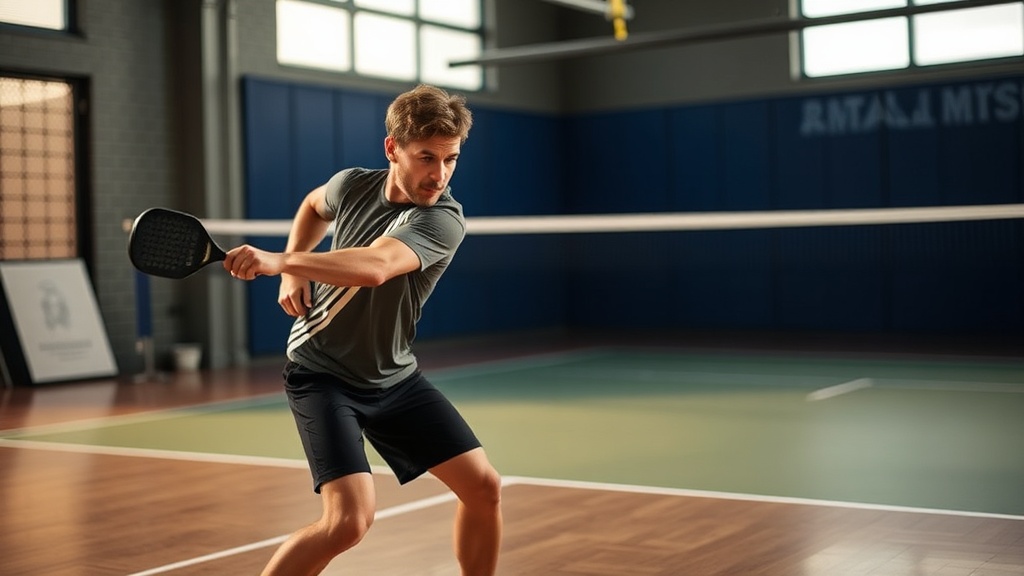
Build Better Core Stability for Consistent Pickleball Movement

Imagine you're mid-rally, lunging toward a short drop shot, only to feel your torso sway unsteadily just as you make contact. The ball clips the net, or worse, flies wide because your center of gravity shifted at the wrong moment. This isn't just a lack of balance; it's a breakdown in your midsection stability. In pickleball, your core acts as the bridge between your lower body power and your upper body precision. Without a stable center, even the most talented players find their shots becoming inconsistent under pressure.
Developing a strong midsection isn't about having a six-pack for aesthetics. It's about creating a rigid, reliable platform that allows you to transfer energy from your legs into your paddle effectively. Whether you're playing a defensive dink battle or an aggressive drive, your ability to stay upright and controlled determines your success. This guide breaks down how to build that stability through targeted movement patterns.
How much core strength do I really need for pickleball?
Many players think they only need strength in their arms or legs, but that's a mistake. While your legs provide the movement, your core provides the control. You need enough stability to maintain your posture while your limbs are moving at high speeds. If your core is weak, you'll likely experience much more fatigue during long tournament days because your body has to work much harder to stay upright.
A stable core helps with several key aspects of the game:
- Rotational Control: When you swing for a heavy drive, your torso rotates. A strong core ensures that this rotation is controlled and doesn't cause you to lose your balance.
- Reactive Stability: Pickleball requires constant changes in direction. You need to be able to stop your momentum and change direction without your torso wobbling.
- Power Transfer: Much of your power comes from the ground up. A stable midsection ensures that the energy generated by your legs actually reaches your paddle rather than getting lost in a "leaky" torso.
For more on the biomechanics of movement, you can check out resources from the Physiopedia database to understand how the human body functions under stress.
What are the best exercises for rotational stability?
Standard crunches won't help you much on the court. You need functional movements that mimic the twisting and bracing-required in a game. One of the best ways to train this is through anti-rotation exercises. These are movements where you resist a force trying to rotate your body, which is exactly what happens when an opponent hits a hard ball toward your side of the court.
Consider adding these three movements to your weekly training routine:
- The Pallof Press: Hold a resistance band or cable at chest height. Push the band forward while resisting the urge to let it pull your torso toward the anchor point. Hold for three seconds, then bring it back.
- Plank Variations: Move beyond the basic forearm plank. Try side planks or the "spiderman" plank, where you bring your knee toward your elbow. This forces your lateral stabilizers to work harder.
- Woodchoppers: Using a light weight or resistance band, move diagonally from high to low. This mimics the rotational torque needed for much of your striking.
Remember, the goal is control, not just intensity. If you can't hold a position without your hips sagging or your back arching, you've gone too far. Slow, controlled repetitions are much more effective for building the stability you need for the court.
Can I improve my balance through core training?
Absolutely. Balance is a byproduct of stability. When your core is strong, your center of gravity remains predictable. This makes it much easier to recover after a wide reach or a sudden sprint. If you're constantly struggling to stay upright after a heavy volley, your core is likely the culprit.
One way to test your current stability is to practice single-leg movements. If you can't stand on one leg for 30 seconds without wobbling, your stabilizers need work. Integrating single-leg stability drills into your training can significantly improve your court coverage and agility. A great resource for understanding proprioception—the body's ability to sense its position—is the Mayo Clinic website, which offers various insights into physical health and balance.
A simple table to track your progress might look like this:
| Exercise Type | Focus Area | Frequency |
|---|---|---|
| Anti-Rotation | Resistance to twisting | 2x per week |
| Lateral Stability | Side-to-side control | 2x per week |
| Dynamic Balance | Single-leg control | Daily/Pre-game |
Don't forget that stability also involves your breath. Many players hold their breath during intense rallies, which actually destabilizes the core. Learning to breathe through your diaphragm while maintaining a braced midsection will help you stay calm and steady even when the game gets fast and loud.
Consistency is the name of the game here. You won't see results overnight, but if you treat your core training with the same seriousness as your technical drills, you'll notice a massive difference in your ability to control the court. A stable core means more controlled shots, better recovery, and a longer life in this sport.