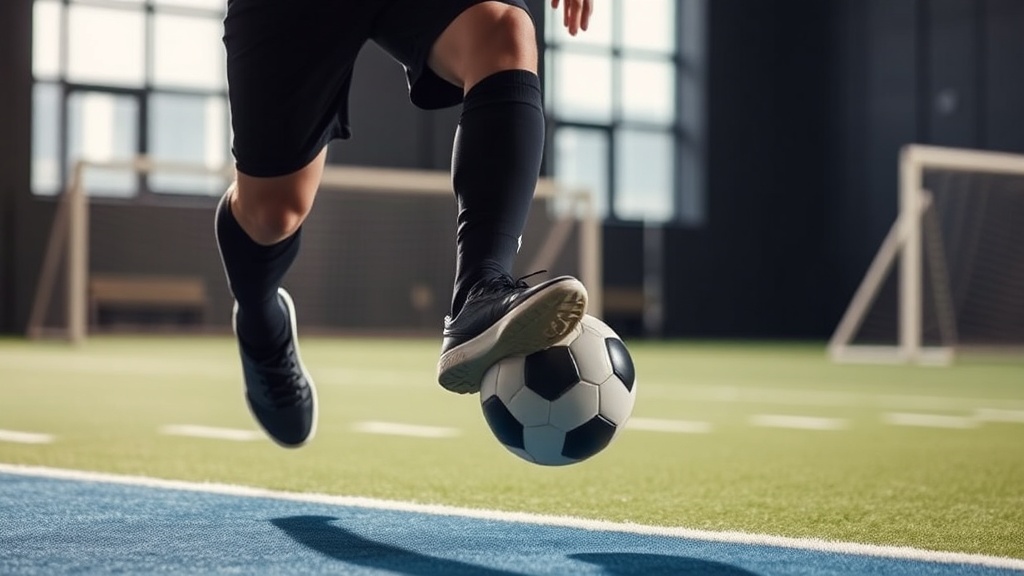
Build Better Footwork with Lateral Agility Drills

You'll learn how to develop explosive lateral movement, improve your reaction time, and build the stability needed to stay in long dink rallies. This guide breaks down specific drills to sharpen your footwork so you aren't just reacting to the ball, but proactively positioning yourself for the next shot.
Pickleball isn't just a game of hands; it's a game of feet. If you can't get your center of gravity into the right position, your much-improved dink or drive won't matter. Most players struggle because they move too much with their upper body instead of using their lower body to shift weight. That's where lateral agility drills come in.
Why is lateral movement so important in pickleball?
Lateral movement is the ability to move side-to-side quickly to cover the court and stay in a position to hit a balanced shot. In pickleball, most of the action happens at the kitchen line or during rapid-fire exchanges at the transition zone. If your lateral speed is slow, you'll find yourself reaching—and reaching usually leads to unforced errors.
When you move poorly, you're often caught "flat-footed." This means your weight is centered in a way that makes a quick burst of speed nearly impossible. By training your lateral agility, you're training your brain and muscles to react to a ball's trajectory before it even hits your paddle. It's about anticipation (and being able to actually reach the ball when you're right).
Strong lateral movement also protects your knees and ankles. When you're forced to make a desperate, lunging reach because your footwork was slow, you're much more likely to suffer a strain. You can check out more on agility training principles to understand the science behind these movements.
Before you jump into high-intensity drills, make sure you keep your joints supple with dynamic mobility drills. You don't want to start a sprint with cold, stiff muscles.
What are the best lateral agility drills for pickleball?
The best drills for pickleball focus on short-burst lateral bursts, rapid weight shifts, and quick deceleration. You don't need a massive gym; a small patch of court or even your driveway will work.
1. The Side Shuffle Drill
This is a fundamental movement used to close the gap at the kitchen line. Instead of running, you'll perform quick, short steps to the side while keeping your hips low.
- Set up: Find two markers (cones, water bottles, or even your paddle) about 10 feet apart.
- Execution: Start at one marker. Use short, choppy steps to shuffle to the other marker.
- Key Tip: Keep your weight on the balls of your feet. If you're on your heels, you're too slow.
2. The X-Drill (Lateral Patterning)
This drill improves your ability to change direction mid-stride. It mimics the way you have to move from a defensive position to an offensive one.
- Start at the center point of your two markers.
- Sprint laterally to the right marker.
- Quickly "brake" (decelerate) and shuffle back to the center.
- Sprint laterally to the left marker.
- Shuffle back to the center and repeat.
3. Ladder Drills (The Speed Specialist)
Agility ladders are a staple for a reason. They force precision in your footwork. You can use a standard Agility Ladder from brands like Blazepods or True Temper to practice these patterns.
Try these patterns for 30 seconds each:
- Two-in, Two-out: Step both feet into a square, then both feet out.
- Lateral Ickey Shuffle: A rhythmic movement that moves you through the ladder sideways.
- Single Leg Hops: This builds the stability needed for one-footed reaches.
| Drill Name | Primary Focus | Difficulty Level | Best For |
|---|---|---|---|
| Side Shuffle | Endurance/Consistency | Low | Kitchen Line Defense |
| X-Drill | Acceleration/Deceleration | Medium | Transition Zone Movement |
| Agility Ladder | Foot Speed/Precision | High | Reaction Time |
How much time should I spend on agility training?
You should spend 15 to 20 minutes per session, three times a week, to see measurable improvements in your court movement. Agility training is taxing on the central nervous system, so you shouldn't do it every single day.
It's better to do a short, high-intensity burst while you're fresh than a long, sluggish session when you're tired. If your form breaks down and you start tripping over your own feet, stop. You're no longer training agility; you're just training bad habits. (And we all know how much those suck during a match).
A common mistake is treating these drills like a marathon. They aren't. They are meant to be explosive. Think of it like a sprint—short, sharp, and intense. If you can manage your energy, you'll find that your "burst" capability increases significantly. This means when a ball is dropped low or hit wide, you're actually there to get it.
Worth noting: If you're feeling particularly fatigued, don't force the high-intensity drills. It's better to scale back to the side shuffle than to risk a tweak. You can always find more tips on small wins for big gains on the court to keep your momentum going without burning out.
Don't forget to hydrate. Even if you're just doing drills in your backyard, your body is working hard. Proper hydration is a key part of recovery, much like the strategies discussed in our post on smart snack strategies.
"Speed is useless if you can't control where you stop. Agility is the marriage of speed and control."
As you progress, try incorporating a ball. Have a partner hit balls to your left and right while you perform your lateral drills. This adds a layer of "reactive" training, which is much closer to a real game than hitting cones. You'll learn to react to the ball's movement rather than just a pre-set pattern.
When you're practicing, pay attention to your center of gravity. If your head is bobbing up and down too much, you're losing energy. Keep your nose level and your hips low. This keeps you in a "ready" state, ready to spring in any direction at a moment's notice.
Steps
- 1
Warm up with light lateral shuffles
- 2
Execute side-to-side cone drills
- 3
Practice reactive shadow movements
- 4
Cool down with low-intensity stepping