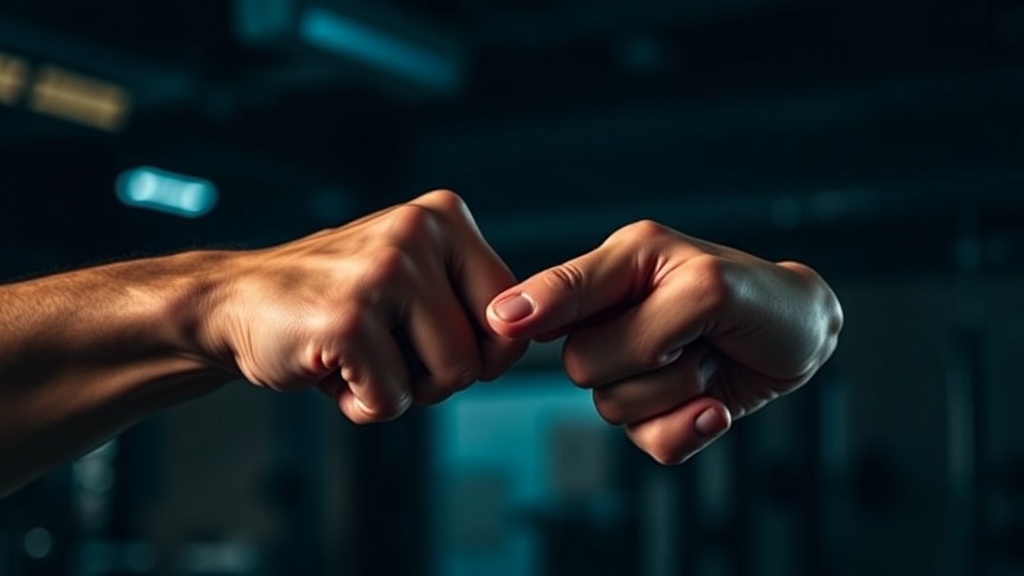
Build Better Grip Strength for Faster Reaction Times

Why Most Players Ignore Their Hands
Most players assume that winning a rally comes down to footwork or paddle positioning. They focus on their swing or their stance, yet they completely overlook the most direct connection to the game: the grip. You can have the perfect stroke, but if your hand strength fails you during a rapid-fire dink battle, your control disappears. A weak grip leads to a shaky paddle face, making it nearly impossible to execute precise-shot placement when the pressure mounts. This isn't just about being strong; it's about fine motor control and the ability to maintain consistent pressure under fatigue.
If you've ever felt your paddle twist during a heavy volley or noticed your hand cramping during a long tournament set, you're experiencing a deficit in grip stability. Improving this specific aspect of your fitness helps you stay composed during high-intensity exchanges. We're looking at how to build that functional strength through targeted movements.
How Can I Increase My Grip Strength for Pickleball?
To build a grip that doesn't quit, you need to address different types of hand strength. It isn't just about crushing things; it's about stability and endurance. You can categorize training into three main areas: crush strength, pinch strength, and isometric stability.
1. Crush Strength Drills
Crush strength is what happens when you squeeze an object between your palm and your fingers. This is what you use when you're hitting a firm drive or reacting to a fast ball. A great way to work on this is with a standard hand gripper. Don't just squeeze randomly—focus on controlled repetitions. Try to perform 15 controlled squeezes, hold for three seconds at the peak of the squeeze, and then release slowly. This slow release is what builds the muscle fibers needed for control.
2. Pinch Strength Drills
Pinch strength involves using your fingertips to hold weight. This is vital for the subtle adjustments you make when resetting a ball at the kitchen line. A simple way to practice this is by holding heavy books or using specialized grip trainers that require a pinch grip. This builds the dexterity needed for those delicate, soft-touch shots.
3. Isometric Stability
Isometric training is about holding a position without moving. For pickleball players, this is perhaps the most practical form of training. Hold a weighted object (like a dumbbell or even a heavy paddle) in a fixed position for 45 to 60 seconds. This trains your muscles to stay steady even when your hand is under constant tension. If your forearm starts to burn, that's a sign you're hitting the right target.
What Are the Best Exercises for Forearm Endurance?
Your grip is only as good as the forearm that supports it. If your forearm fatigues, your grip strength will naturally drop. To build endurance, you should incorporate movements that challenge your ability to hold a position over time.
- Wrist Curls: Use a light weight and curl your wrist upward, focusing on the contraction.
- Reverse Wrist Curls: This targets the top of the forearm, which is essential for preventing common injuries like tendonitis.
- Farmer's Carries: Grab two heavy dumbbells and walk for a set distance or time. This is a foundational movement for building total hand and forearm resilience.
Don't rush these exercises. The goal isn't to lift the heaviest weight possible in one go—it's to build the capacity to hold weight steadily. For more on how physical training affects performance, check out the