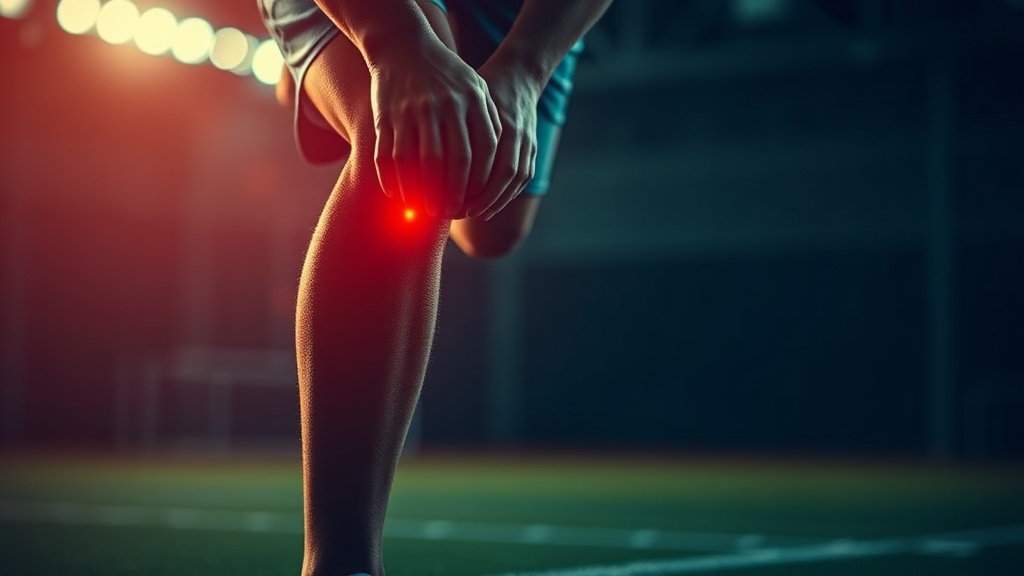
Keep Your Knees Healthy for Years of Play

The sound of a harder-than-usual thud on a hard court surface often signals a problem before the pain even hits. In pickleball, your knees endure constant lateral lunges, sudden stops, and high-impact pivots. This post explores the mechanics of knee health, from strengthening the surrounding musculature to choosing the right footwear and recovery protocols to keep you on the court for the long haul.
If you've felt that sharp twinge during a deep dink volley or a frantic sprint to the kitchen line, you aren't alone. The repetitive stress of the game—especially on hard surfaces—can wear down the cartilage and ligaments if you aren't careful. Protecting your joints is about more than just avoiding injury; it's about maintaining your mobility so you can stay competitive as you age.
How Can I Strengthen My Knees for Pickleball?
Strengthening the muscles around the knee—specifically the quadriceps, hamstrings, and glutes—is the most effective way to stabilize the joint. You don'ont want your knee to take the brunt of the impact; you want your muscles to act as shock absorbers.
Focusing on unilateral (one-legged) exercises is a smart move. Most pickleball movements involve a single-leg stance or a sudden weight shift. If your glutes are weak, your knee might cave inward—a movement called valgus—which is a recipe for disaster. I suggest adding these movements to your weekly routine:
- Bulgarian Split Squats: These are brutal but incredibly effective for building stability.
- Step-Ups: Use a sturdy box or a gym bench to improve your deceleration strength.
- Lateral Lunges: Since pickleball is a lateral game, you need to train your body to move side-to-side without losing control.
- Single-Leg Romanian Deadlifts: This helps with posterior chain strength and balance.
Don't overlook your ankles either. A stiff ankle forces the knee to compensate for a lack of range of motion. If you're interested in how lower body mechanics affect your movement, check out my previous post on strengthening weak ankles.
What Type of Shoes Should I Wear for Pickleball?
You need court-specific shoes with lateral support to prevent ankle rolls and knee strain. While running shoes are great for forward motion on a treadmill, they are actually quite dangerous for the side-to-side movements required on a pickleball court. Running shoes have a high stack height and soft midsoles that lack the lateral stability needed for quick pivots.
Instead, look for "court shoes" designed for tennis or pickleball. These shoes feature a lower profile and a wider base. Brands like ASICS and Adidas make excellent models that provide a stable platform. For instance, the ASICS Gel-Resolution series is a favorite among many competitive players because of its lateral stability and durability.
Here is a quick comparison of footwear types to help you decide:
| Footwear Type | Best For | Avoid Using For |
|---|---|---|
| Running Shoes | Straight-line jogging/walking | Lateral-heavy pickleball drills |
| Tennis/Pickleball Shoes | Side-to-side movement & pivots | Long-distance road running |
| Cross-Trainers | General gym workouts | High-intensity court-side sprinting |
If you find yourself constantly replacing your shoes, you might be playing on surfaces that are too abrasive or wearing out the outsoles too quickly. A good pair of court shoes should provide enough cushioning to absorb impact without being so "mushy" that you lose your sense of the ground.
How Do I Prevent Knee Pain During Play?
Prevention starts with a dynamic warm-up and ends with proper post-game recovery. You shouldn't just walk onto the court and start smashing drives; your joints need to be lubricated and your muscles primed for action.
A static stretch—where you hold a position for 30 seconds—is actually better suited for *after* your game. Before you play, use dynamic movements. Think leg swings, butt kicks, and light side-shuffles. This tells your nervous system that it's time to work. If you skip this, you're essentially asking your knees to handle high-impact stress while they're still "cold."
Once the game is over, the work isn't done. Many players make the mistake of sitting in their car immediately after a match. This leads to stiffness. Instead, try these steps:
- Cool Down: Walk for five minutes to let your heart rate drop gradually.
- Foam Rolling: Use a tool like a TriggerPoint roller on your IT band and quadriceps. It might feel uncomfortable (even a bit painful), but it helps release tension.
- Ice or Heat: If you feel acute inflammation, ice is your friend. If you just feel general stiffness, heat might help circulation.
If you're already experiencing soreness, you might want to look into why your post-game soreness lasts too long. Understanding the difference between "good" muscle soreness and "bad" joint pain is a skill in itself.
It's also worth noting that your playing surface matters. Playing on a concrete pad is much harder on the knees than playing on a specialized cushioned court surface. If you have access to a choice, pick the one with a bit more "give."
The Mayo Clinic offers excellent resources on knee pain management and injury prevention. It's always a good idea to check their clinical advice if you're experiencing persistent discomfort. If the pain is sharp, stabbing, or causes your knee to "lock," stop playing immediately and consult a professional. Pushing through a structural injury is a mistake that can lead to months of physical therapy.
Strength training is your insurance policy. You can have the best technique in the world, but if your kinetic chain—your ankles, knees, and hips—isn't strong, you'll eventually hit a wall. Make the time to lift weights and work on your mobility. Your future self will thank you when you're still out-maneuvering opponents at age 60.