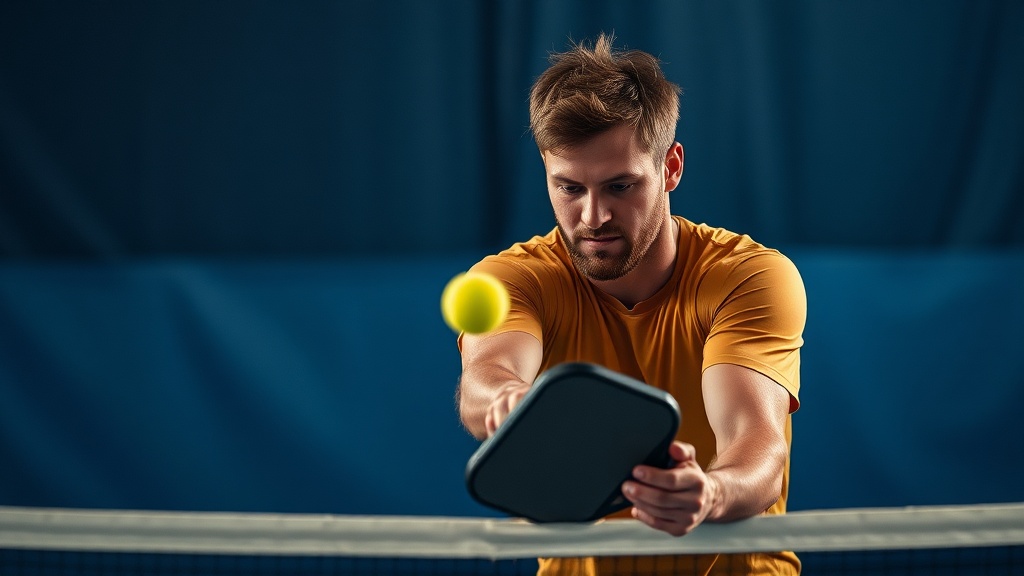
Why Do Your Shoulders Feel Tight After Long Pickleball Sessions?

Why Do Your Shoulders Feel Tight After Long Pickleball Sessions?
Are your shoulders screaming at you after a weekend tournament or a long drill session? You're not alone—shoulder tightness is one of the most common complaints among pickleball players, especially those transitioning from casual play to competitive matches. The repetitive overhead motions—serves, smashes, overhead volleys—place unique demands on your rotator cuff and scapular stabilizers. And here's the thing: most players focus on their knees and ankles (which matter, of course) while completely neglecting shoulder maintenance until pain forces them to stop playing.
This guide covers practical strategies to keep your shoulders healthy, mobile, and pain-free—so you can keep hitting those high percentage shots without wincing every time you reach overhead.
What's Actually Happening to Your Shoulders During Play?
Pickleball places your shoulder in some mechanically awkward positions. The overhead smash—arguably the most satisfying shot in the game—requires rapid external rotation and full range of motion under load. Do this dozens (or hundreds) of times per session, and small compensations start adding up.
Most recreational players develop what physical therapists call "upper crossed syndrome"—tight pectorals and upper traps paired with weak lower traps and serratus anterior muscles. This imbalance pulls your shoulder blade (scapula) out of its ideal position, reducing the space where your rotator cuff tendons glide. The result? That pinching sensation when you reach overhead. That burning ache after a long session. That stiffness the next morning that makes you wonder if you should ice, heat, or just hope it goes away.
The good news: this isn't inevitable. With targeted mobility work and some simple strength exercises, you can create a shoulder complex that handles pickleball's demands—and actually improves your shot power as a bonus.
How Can You Improve Shoulder Mobility Without Spending Hours Stretching?
You don't need a 45-minute yoga routine. What you need is targeted, frequent movement—think "movement snacks" throughout your day rather than one massive stretching session.
Thoracic spine rotation is your first priority. A stiff upper back forces your shoulder to compensate by moving more than it should. Try this: sit tall, cross your arms, and rotate your upper body as far as comfortable—10 reps each direction, twice daily. This simple drill (backed by research on overhead athletes) maintains the mobility your shoulders depend on.
Sleeper stretches address the posterior capsule tightness that plagues overhead athletes. Lie on your side with your bottom arm bent at 90 degrees, elbow tucked to your ribs. Use your top hand to gently press your forearm toward the floor until you feel a stretch in the back of your shoulder. Hold for 30 seconds—no bouncing. Do this after play, not before. Research from the American Academy of Orthopaedic Surgeons suggests this targets the specific tightness patterns seen in racquet sports.
Wall slides train your shoulder blades to move correctly while maintaining good posture. Stand with your back against a wall, arms in a "W" position, then slowly slide them up to a "Y" without letting your lower back arch or your ribs flare. This looks easy—until you try to keep everything controlled. Start with 2 sets of 10 daily.
What Strength Exercises Actually Protect Your Shoulders?
Mobility without strength is instability. Your shoulder is a shallow ball-and-socket joint held together primarily by muscles—specifically your rotator cuff. These four small muscles (supraspinatus, infraspinatus, teres minor, and subscapularis) act as dynamic stabilizers, keeping your humeral head centered while you swing.
External rotation work is non-negotiable. Use a light resistance band—seriously, start lighter than you think—tied to a doorknob or fence. Stand with your elbow tucked at your side, forearm across your belly. Rotate your forearm outward against the band's resistance, keeping your elbow glued to your ribs. 3 sets of 15 reps each arm. This directly targets infraspinatus and teres minor, the muscles most stressed during pickleball's follow-through.
Face pulls with a band strengthen your rear deltoids and lower traps—muscles that pull your shoulder blades back and down, creating a stable platform for overhead movement. Pull the band toward your face, separating your hands as you do, and pause for a one-second squeeze at the end. Feel this between your shoulder blades, not in your neck.
Serratus punches or "push-up plus" variations wake up the muscle that keeps your shoulder blade hugging your ribcage. In a plank position (wall or floor), keep your arms straight and let your chest sink toward the floor by relaxing your shoulder blades, then press away by spreading them apart. This small movement—maybe an inch of travel—makes a massive difference in shoulder health. Research published in the Journal of Science and Medicine in Sport connects serratus anterior weakness to impingement syndromes in overhead athletes.
Should You Play Through Shoulder Discomfort?
Here's where we get honest: there's a difference between muscle fatigue and joint pain. The former—muscles feeling worked, maybe slightly burning—is normal, especially after intense sessions. The latter—sharp pain, pinching sensations, pain that wakes you at night—is your body asking for help.
If you feel pinching during overhead motions, stop. Not forever—but stop and assess. Often this means your shoulder isn't sitting in the right position, and continuing will irritate the bursa or tendons further. Take a day off overhead shots. Work on your soft game—dinks, drops, third-shot drops that stay below net level. You'll keep your skills sharp while giving your shoulder a break from the most stressful positions.
Warm-up matters more than most players think. Before you step on court, spend 3-5 minutes doing arm circles (small to large), band pull-aparts, and a few light practice serves. Cold tissues are more susceptible to strain. Think of your shoulder like a rubber band—warm ones stretch and snap back; cold ones crack.
Post-play recovery deserves attention too. That 10-minute window after you finish—while your tissues are still warm—is perfect for those sleeper stretches we mentioned. Follow with some gentle pendulum swings (bend at the waist, let your arm hang, make small circles) to keep synovial fluid moving through the joint.
Signs You Should See a Professional
Most shoulder issues respond to rest and targeted exercises within 2-3 weeks. But certain symptoms warrant professional evaluation:
- Night pain that wakes you up, especially when lying on the affected side
- Visible muscle wasting or asymmetry between shoulders
- True weakness—not just fatigue—when lifting your arm overhead
- Pain that doesn't improve with 2-3 weeks of modified activity
A sports physical therapist can assess your movement patterns, identify specific weaknesses, and create a targeted program. The investment in an evaluation—often just 1-2 sessions—can save you months of frustrating time away from the game.
How Long Until You Notice Improvements?
Consistency beats intensity here. You won't fix months (or years) of tightness in a single stretching marathon. What works: 10-15 minutes of targeted work, five to six days per week, for three to four weeks.
Most players report that warm-up discomfort decreases within the first week. That "rusty hinge" feeling when you first raise your arm overhead? It usually fades quickly once you start addressing thoracic mobility. The deeper stability improvements—strength that protects you during long matches—take longer. Give it six weeks of dedicated work before evaluating your progress.
Think of shoulder maintenance like brushing your teeth. You don't wait for a cavity to start caring about dental hygiene—and you shouldn't wait for pain to start caring about shoulder health. Ten minutes of prevention beats six weeks of rehab every single time.
"The players who stay competitive into their 60s and 70s aren't necessarily the most talented—they're the ones who figured out how to keep their bodies working. Shoulder health is a huge piece of that puzzle." — Dr. Andrea Maldonado, Physical Therapist & Pickleball Player
Your paddle is only as effective as the shoulder moving it. Invest in this foundational work now, and you'll keep playing the game you love—without that nagging tightness reminding you every time you reach for a smash.