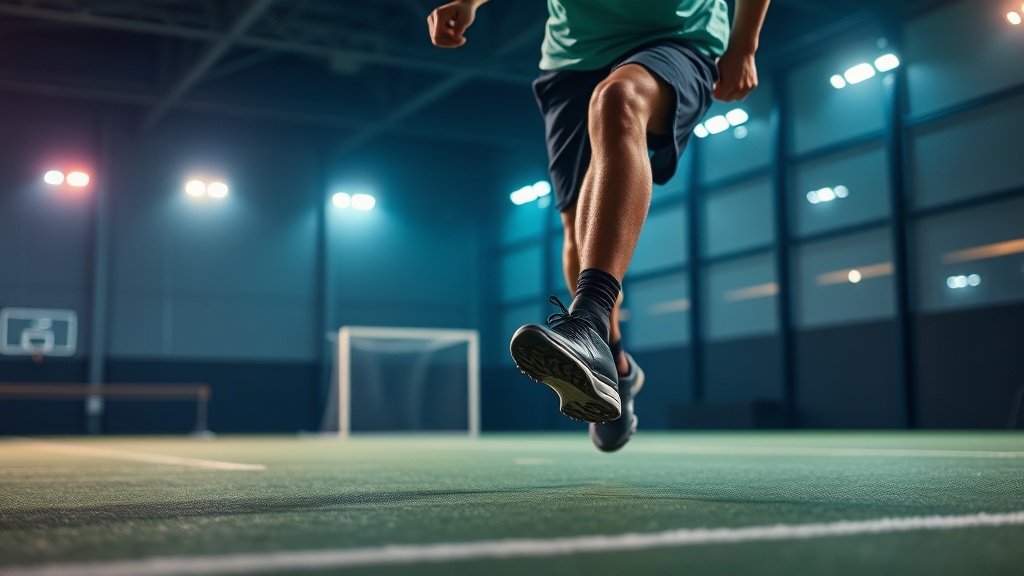
Improve Your Footwork with Lateral Agility Drills

Research shows that up to 70% of pickleball points are won or lost based on court positioning rather than shot quality alone. This means your feet often matter more than your paddle. This guide covers specific lateral agility drills designed to increase your side-to-side speed, improve your reaction time at the kitchen line, and help you stay balanced during intense rallies. If you want to stop reaching for balls and start stepping into them, you need to focus on lateral movement patterns.
How Do I Improve My Lateral Movement in Pickleball?
You improve lateral movement by training your nervous system to react faster and strengthening the lateral stabilizers in your hips and ankles. Most players focus way too much on forward sprinting, but pickleball is a game of lateral-to-diagonal adjustments. You aren't just running; you're shuffling and lunging.
To start, you need to understand the mechanics of the side-shuffle. This isn't a casual stroll. It's a controlled, explosive movement where your center of gravity stays low. If your head is bobbing up and down, you're losing energy. You want to keep your weight on the balls of your feet—not your heels—to ensure you can change direction instantly.
One of the best ways to train this is through agility ladder drills. You can use a standard agility ladder to practice quick footwork patterns. These drills build the neuromuscular pathways required for rapid-fire footwork. When you're stuck in a dink battle, your feet need to move in tiny, micro-adjustments rather than large, clumsy steps.
Here is a basic progression for your training sessions:
- The Lateral Shuffle: Set two cones about 10 feet apart. Shuffle between them as fast as possible while keeping your hips low and your chest facing the net.
- The X-Drill: Move diagonally from one corner to the center, then shuffle laterally to the other side, then backpedal. This mimics the actual-life movement of a real rally.
- Skater Jumps: These are lateral plyometric jumps that build explosive power. Jump from one foot to the other, landing with a stable, slightly bent knee.
If you find that your balance feels off during these jumps, you might need to look at your stability. Why weak ankles slow your court coverage is a common issue that directly impacts how well you can execute these lateral drills. If your ankles are unstable, your lateral speed will always have a ceiling.
What Are the Best Drills for Pickleball Agility?
The best drills for pickleball agility involve multi-directional movements that mimic the unpredictable nature of a real game. You can't just practice linear running; you need drills that force your body to change planes and directions rapidly.
I recommend using a reaction ball or even a standard pickleball against a wall for these drills. The goal is to move your feet in response to an external stimulus. If you only practice drills where you control the pace, you won't be ready when a fast dink or a hard drive comes at you. Speed is useless if your reaction time is slow.
Consider incorporating these three specific drills into your weekly routine:
| Drill Name | Primary Benefit | Equipment Needed |
|---|---|---|
| Lateral Shuffles | Side-to-side speed | Cones or markers |
| Skater Jumps | Explosive lateral power | Flat surface |
| Ladder Drills | Foot speed/Coordination | Agility Ladder |
| Cone Touches | Reaction & Agility | 4 Cones |
The Cone Touch Drill is a personal favorite. Set four cones in a square. Have a partner call out a color or a number, and you have to sprint (or shuffle) to that cone and back to the center. This forces you to stay mentally engaged while your body is working. It’s a mental game as much as a physical one.
Don't forget that your power comes from the ground up. While you're working on your feet, you're also building the strength needed for more powerful shots. If you want to see how this connects to your striking, check out how to develop explosive rotation for better shots.
How Often Should I Practice Agility Drills?
You should practice agility drills 2 to 3 times a week, ensuring you allow for adequate recovery between sessions to avoid overuse injuries. Agility training is high-impact on the central nervous and musculoskeletal systems. You can't do it every single day without risking burnout or injury.
A typical session should look like this: 10 minutes of dynamic warm-up, 20 minutes of high-intensity drills, and 10 minutes of cool-down. Don't jump straight into the hard stuff. Your joints—especially your knees and ankles—need to be primed. If you try to do explosive skater jumps on "cold" legs, you're asking for a strain. It’s a bad idea.
The Importance of Recovery:
During agility training, you are taxing your fast-twitch muscle fibers. These fibers need more time to recover than slow-twitch fibers used for steady-state cardio. If you feel a sharp pain or even a dull ache in your lateral hip, stop. That’s your body telling you that you've reached your limit for the day.
It’s also worth noting that your footwear matters. If you're wearing heavy running shoes, you're actually slowing yourself down. Running shoes are designed for forward motion. For pickleball, you want a shoe with a flatter sole and better lateral support to prevent ankle rolls. This is a common mistake I see at the local courts in Tucson—players wearing shoes that aren'ont support lateral movement.
If you find that your upper body is also feeling the strain of these intense sessions, you might want to investigate why your shoulders feel tight after long sessions. A balanced approach to training means looking at the whole body, not just your feet.
One thing to keep in mind: quality always beats quantity. It is much better to do five high-intensity, perfectly executed lateral shuffles than twenty sloppy, slow ones. If your form breaks down, the drill is over. You want to train your brain to remember the correct movement pattern, not the mistakes.
As you get more comfortable, you can increase the difficulty by adding a ball. Have a friend hit balls to different areas of the court while you perform your drills. This forces you to integrate your footwork with your paddle control. That is where the real magic happens—when your feet move instinctively to set up the perfect shot.
The more you practice these lateral movements, the more "automatic" they become. Eventually, you won't even think about it. You'll just see the ball, and your feet will already be in position. That's the goal. That's how you move from a recreational player to a competitive one.
Steps
- 1
The Lateral Shuffle Warm-up
- 2
Cone Agility Drills
- 3
Shadow Drills for Reactionary Movement
- 4
Interval Speed Bursts